
Routine monitoring
Checks, alerts, and operational visibility for the live system.
Best for keeping the build stable once the first launch is complete.Services
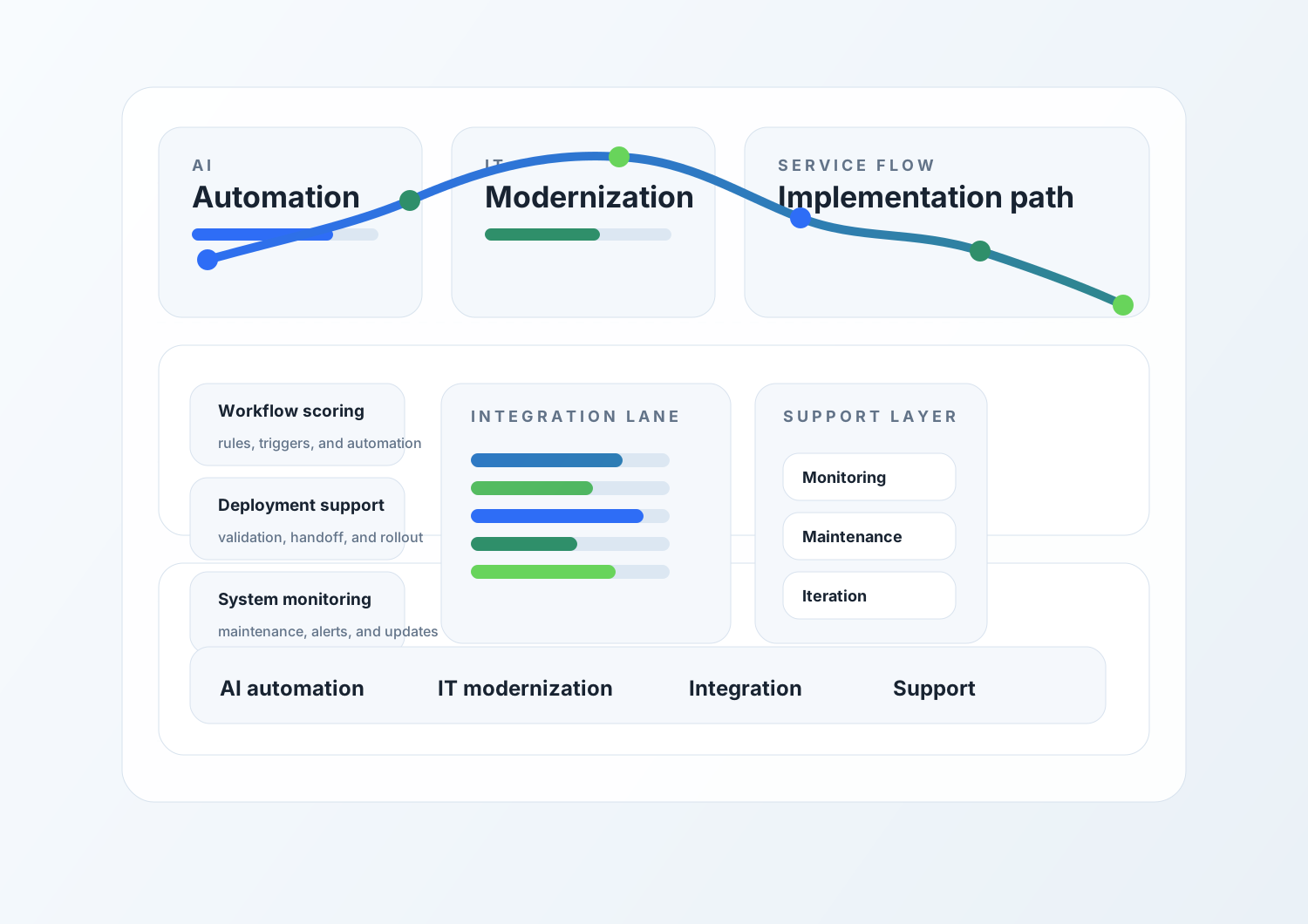
Pooltech helps enterprise buyers define scope, connect systems, automate workflows, and keep the operating model stable after launch.
Service atlas
Automation, scoring, and structured analysis designed around the business workflow.
Infrastructure, deployment, and maintenance work that keeps the stack dependable.
Data and team handoffs are connected without turning the operating model into noise.
Capability matrix
Automation rules, workflow scoring, and analysis support.
Less manual review and faster decisions.
Working models and repeatable logic.
Modernization, deployment, and infrastructure planning.
More stable systems and cleaner rollouts.
Clear implementation paths.
Connect tools, data, and internal teams.
Fewer handoffs and lower coordination cost.
Unified operating flow.
Monitoring, maintenance, and ongoing improvement.
Longer-term reliability after launch.
Stable delivery model.
Delivery playbook
We keep the work practical. First we define the problem and systems involved, then we design the workflow, then we implement and support it with a clear operating path.
Current stack review, goals, constraints, and handoff map.
Used to define realistic scope and ownership.
Workflow structure, integration points, and implementation sequence.
Keeps the build aligned with how the team actually works.
Build, validation, and rollout support.
Focuses on stability during launch.
Monitoring, maintenance, and gradual improvement.
Helps the service stay useful after go-live.
Coverage
The page is intentionally structured differently from Home. Instead of a brand story, it acts like a working reference: what we do, what changes, and how the service stays supportable.
Support model
That means the system stays observable, the team knows where decisions happen, and the scope of support stays easy to understand.
Checks, alerts, and operational visibility for the live system.
Best for keeping the build stable once the first launch is complete.Improvement cycles for workflow tuning, reporting, and integration adjustments.
Useful when the business wants to refine the system without re-scoping everything.Longer-term support for teams that expect continual change in tools, channels, or requirements.
Works well for enterprise teams that need a dependable external operator.Engagement model
Review the current stack and identify the highest-friction points.
Map the service scope, system flow, and support boundaries.
Implement the workflow, integration, and deployment logic.
Monitor performance and keep the operating model improving.
Contact
Email: contact@pooltech.ai